St. Bernard of Clairvaux

Facts
Death: 1153
Author and Publisher - Catholic Online
Printable Catholic Saints PDFs
Shop St. Bernard of Clairvaux

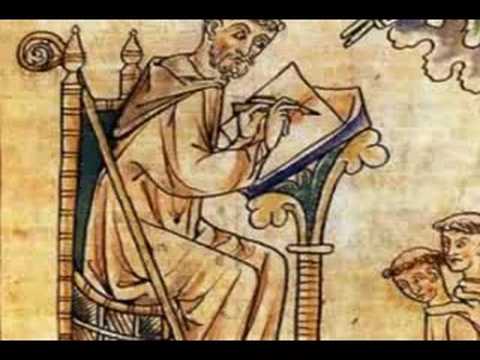
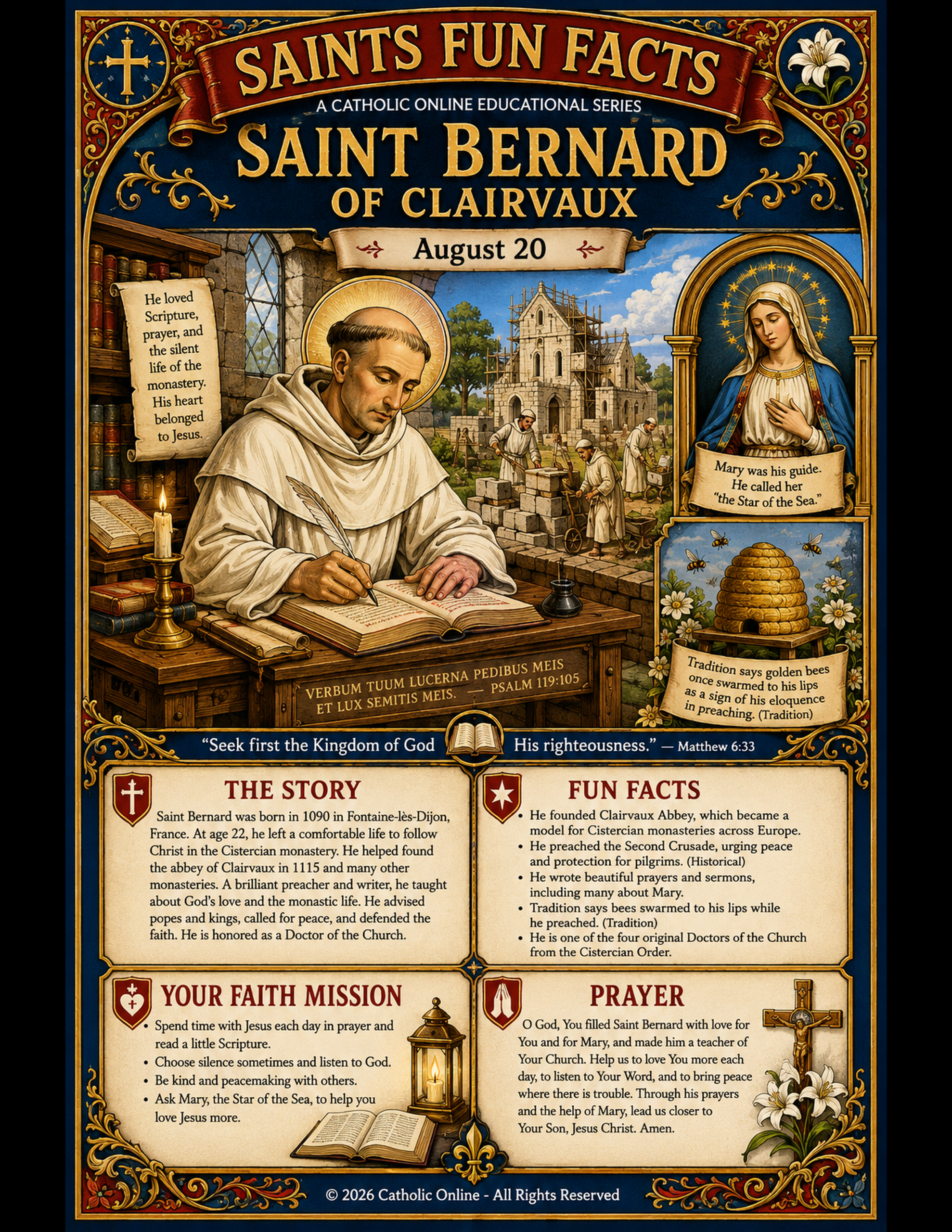
St. Bernard, Abbot and Doctor of the Church St. Bernard was born of noble parentage in Burgundy, France, in the castle of Fontaines near Dijon. Under the care of his pious parents he was sent at an early age to a college at Chatillon, where he was conspicuous for his remarkable piety and spirit of recollection. At the same place he entered upon the studies of theology and Holy Scripture. After the death of his mother, fearing the snares and temptations of the world, he resolved to embrace the newly established and very austere institute of the Cistercian Order, of which he was destined to become the greatest ornament. He also persuaded his brothers and several of his friends to follow his example. In 1113, St. Bernard, with thirty young noblemen, presented himself to the holy Abbot, St. Stephen, at Citeaux. After a novitiate spent in great fervor, he made his profession in the following year. His superior soon after, seeing the great progress he had made in the spiritual life, sent him with twelve monks to found a new monastery, which afterward became known as the celebrated Abbey of Clairvaux. St. Bernard was at once appointed Abbot and began that active life which has rendered him the most conspicuous figure in the history of the 12th century. He founded numerous other monasteries, composed a number of works and undertook many journeys for the honor of God. Several Bishoprics were offered him, but he refused them all. The reputation of St. Bernard spread far and wide; even the Popes were governed by his advice. He was commissioned by Pope Eugene III to preach the second Crusade. In obedience to the Sovereign Pontiff he traveled through France and Germany, and aroused the greatest enthusiasm for the holy war among the masses of the population. The failure of the expedition raised a great storm against the saint, but he attributed it to the sins of the Crusaders. St. Bernard was eminently endowed with the gift of miracles. He died on August 20, 1153. His feast day is August 20.
Come Grow With Us
Sign up and walk the Catholic journey with millions around the world.
Receive inspiring emails on saints, daily readings, and free faith-building resources—no cost, ever.
Millions rely on our FREE Catholic resources - your donation helps keep them free.

- 7 Morning Prayers
- Mysteries of the Rosary
- Litany of the Bl. Virgin Mary
- Popular Saints
- Popular Prayers
- Female Saints
- Saint Feast Days by Month
- Stations of the Cross
- St. Francis of Assisi
- St. Michael the Archangel
- The Apostles' Creed
- Unfailing Prayer to St. Anthony
- Pray the Rosary







Copyright 2026 Catholic Online. All materials contained on this site, whether written, audible or visual are the exclusive property of Catholic Online and are protected under U.S. and International copyright laws, © Copyright 2026 Catholic Online. Any unauthorized use, without prior written consent of Catholic Online is strictly forbidden and prohibited.
Catholic Online is a Project of Your Catholic Voice Foundation, a Not-for-Profit Corporation. Your Catholic Voice Foundation has been granted a recognition of tax exemption under Section 501(c)(3) of the Internal Revenue Code. Federal Tax Identification Number: 81-0596847. Your gift is tax-deductible as allowed by law.
