We ask you, urgently: don't scroll past this
Dear readers, Catholic Online was de-platformed by Shopify for our pro-life beliefs. They shut down our Catholic Online, Catholic Online School, Prayer Candles, and Catholic Online Learning Resources essential faith tools serving over 1.4 million students and millions of families worldwide. Our founders, now in their 70's, just gave their entire life savings to protect this mission. But fewer than 2% of readers donate. If everyone gave just $5, the cost of a coffee, we could rebuild stronger and keep Catholic education free for all. Stand with us in faith. Thank you.Help Now >
St. Richard of Wyche


Facts
Patron: of Coachmen; Diocese of Chichester; Sussex, England
Birth: 1197
Death: 1253
Author and Publisher - Catholic Online
Printable Catholic Saints PDFs
Shop St. Richard of Wyche

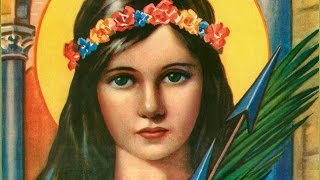
Richard of Wyche, also known as Richard of Chichester, was born at Wyche (Droitwich), Worcestershire, England. He was orphaned when he was quite young. He retrieved the fortunes of the mismanaged estate he inherited when he took it over, and then turned it over to his brother Robert. Richard refused marriage and went to Oxford, where he studied under Grosseteste and met and began a lifelong friendship with Edmund Rich. Richard pursued his studies at Paris, received his M.A. from Oxford, and then continued his studies at Bologna, where he received his doctorate in Canon Law. After seven years at Bologna, he returned to Oxford, was appointed chancellor of the university in 1235, and then became chancellor to Edmund Rich, now archbishop of Canterbury, whom he accompanied to the Cistercian monastery at Pontigny when the archbishop retired there. After Rich died at Pontigny, Richard taught at the Dominican House of Studies at Orleans and was ordained there in 1243. After a time as a parish priest at Deal, he became chancellor of Boniface of Savoy, the new archbishop of Canterbury, and when King Henry III named Ralph Neville bishop of Chichester in 1244, Boniface declared his selection invalid and named Richard to the See. Eventually, the matter was brought to Rome and in 1245, Pope Innocent IV declared in Richard's favor and consecrated him. When he returned to England, he was still opposed by Henry and was refused admittance to the bishop's palace; eventually Henry gave in when threatened with excommunication by the Pope. The remaining eight years of Richard's life were spend in ministering to his flock. He denounced nepotism, insisted on strict clerical discipline, and was ever generous to the poor and the needy. He died at a house for poor priests in Dover, England, while preaching a crusade, and was canonized in 1262. His feast day is April 3.
Come Grow With Us
Sign up and walk the Catholic journey with millions around the world.
Receive inspiring emails on saints, daily readings, and free faith-building resources—no cost, ever.
Sister Sara Has One Message for Every Catholic Family This June
- Easter / Lent
- 5 Lenten Prayers
- Ash Wednesday
- 7 Morning Prayers
- Mysteries of the Rosary
- Litany of the Bl. Virgin Mary
- Popular Saints
- Popular Prayers
- Female Saints
- Saint Feast Days by Month
- Stations of the Cross
- St. Francis of Assisi
- St. Michael the Archangel
- The Apostles' Creed
- Unfailing Prayer to St. Anthony
- Pray the Rosary









Copyright 2026 Catholic Online. All materials contained on this site, whether written, audible or visual are the exclusive property of Catholic Online and are protected under U.S. and International copyright laws, © Copyright 2026 Catholic Online. Any unauthorized use, without prior written consent of Catholic Online is strictly forbidden and prohibited.
Catholic Online is a Project of Your Catholic Voice Foundation, a Not-for-Profit Corporation. Your Catholic Voice Foundation has been granted a recognition of tax exemption under Section 501(c)(3) of the Internal Revenue Code. Federal Tax Identification Number: 81-0596847. Your gift is tax-deductible as allowed by law.