We ask you, urgently: don't scroll past this
Dear readers, Catholic Online was de-platformed by Shopify for our pro-life beliefs. They shut down our Catholic Online, Catholic Online School, Prayer Candles, and Catholic Online Learning Resources essential faith tools serving over 1.4 million students and millions of families worldwide. Our founders, now in their 70's, just gave their entire life savings to protect this mission. But fewer than 2% of readers donate. If everyone gave just $5, the cost of a coffee, we could rebuild stronger and keep Catholic education free for all. Stand with us in faith. Thank you.Help Now >
THURSDAY HOMILY: Ask, Knock, Seek and Persist. Prayer is a Path to Freedom
FREE Catholic Classes
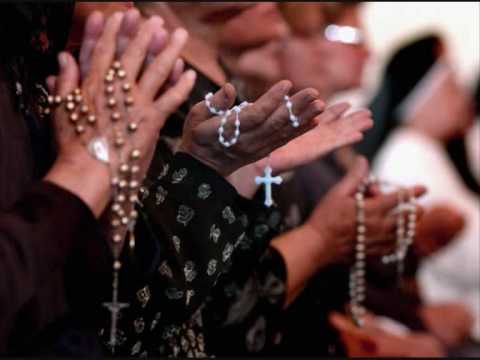
Through prayer, we are drawn by Love into a deepening relationship with Jesus whose loving embrace on the hill of Golgotha bridged heaven with earth; His relationship with His Father is opened to us; the same Spirit that raised Him from the dead begins to give us new life as we are converted, transfigured and made new. Through prayer, heavenly wisdom is planted in the field of our hearts and we experience a deepening communion with the Trinitarian God. We begin to experience the mystery and meaning in those words of the Apostle and actually become partakers of the divine nature. (2 Peter 1:4)

Highlights
Catholic Online (https://www.catholic.org)
2/22/2013 (1 decade ago)
Published in Year of Faith
Keywords: Prayer, contemplative prayer, contemplation, meditation, spirituality, devotion, holiness, Year of faith, Cross, holiness, way of life, Deacon Keith Fournier
P>CHESAPEAKE, VA. (Catholic Online) - Today's Gospel passage at Mass is from the account of one of the teachings the Lord gave to his disciples concerning prayer in the Gospel of St. Matthew:
"Jesus said to his disciples: "Ask and it will be given to you; seek and you will find; knock and the door will be opened to you. For everyone who asks, receives; and the one who seeks, finds; and to the one who knocks, the door will be opened."
"Which one of you would hand his son a stone when he asked for a loaf of bread - or a snake when he asked for a fish? If you then, who are wicked, know how to give good gifts to your children, how much more will your heavenly Father give good things to those who ask him. Do to others whatever you would have them do to you. This is the law and the prophets." (Matt 7:7-12)
St. Luke's account of this teaching follows after the disciples find Jesus in prayerful communion with His Father. In His Sacred humanity, Jesus shows them the way of life into which they will be initiated through His gift on Golgotha's Hill and His defeat of death through the empty tomb. Luke adds an additional parable to communicate to us that prayer often involves persistence.
"And he said to them, "Which of you who has a friend will go to him at midnight and say to him,`Friend, lend me three loaves; for a friend of mine has arrived on a journey, and I have nothing to set before him'; and he will answer from within, `Do not bother me; the door is now shut, and my children are with me in bed; I cannot get up and give you anything'?" I tell you, though he will not get up and give him anything because he is his friend, yet because of his importunity he will rise and give him whatever he needs. "
"And I tell you, Ask, and it will be given you; seek, and you will find; knock, and it will be opened to you. For every one who asks, receives, and he who seeks finds, and to him who knocks it will be opened. What father among you, if his son asks for a fish, will instead of a fish give him a serpent; or if he asks for an egg, will give him a scorpion? If you then, who are evil, know how to give good gifts to your children, how much more will the heavenly Father give the Holy Spirit to those who ask him!" (Luke 11:5-13)
Prayer leads us into a life of communion. It is our fuel, the wind in our sails. We who are baptized into Jesus Christ are to live our lives in Him, by living them in His Body, the Church, of which we are members. (1 Cor. 12:27) This call to live in Him engages our freedom and invites our continual response to His grace.
The intimate communion the disciples witnessed when they came upon Jesus in prayer can become our experience. We are adopted sons and daughters of "His Father and Our Father". (John 20:17). The ongoing instruction which they received as they walked with Him daily can become ours when we walk with Him daily.
The Jesus who instructed them in these accounts is alive with us. He has been raised from the dead. We need the eyes of faith to see Him and the courage to accompany Him on the way. Through Jesus we are made capable of living an entirely new way of life. In the words of the Apostle Peter, we become partakers of the divine nature (2 Peter 1).
It is by learning to live in the communion of the Church that we come to receive this divine life. It is mediated through the Sacraments. It forms us through the Word of God and the wisdom of the teaching office of the Church. It recreates us into the Image and likeness of God fully revealed in Jesus Christ.
God created us in His Image for a loving, relational conversation of life with Him. Understanding what it meant to be created in His Image, and then to fall, requires us to reflect upon human freedom. The Catechism reminds us that "In man, true freedom is an outstanding manifestation of the divine image. (CCC #1712). Our capacity to choose what is true and good was fractured as a result of sin.
The Catechism explains the consequence, "Man, having been wounded in his nature by original sin, is subject to error and inclined to evil in exercising his freedom" and the remedy, " He who believes in Christ has new life in the Holy Spirit. The moral life, increased and brought to maturity in grace, is to reach its fulfillment in the glory of heaven." (CCC #1714, 1715)
Our relationship with God was broken by original sin. It was a misuse of freedom. Freedom was corroded and corrupted by pride and self sufficiency. Our ability to exercise our freedom by directing our capacity for free choice always toward the good was impeded because of the fall.
"Man, enticed by the Evil One, abused his freedom at the very beginning of history. He succumbed to temptation and did what was evil. He still desires the good, but his nature bears the wound of original sin. He is now inclined to evil and subject to error: Man is divided in himself. As a result, the whole life of men, both individual and social, shows itself to be a struggle, and a dramatic one, between good and evil, between light and darkness. By his Passion, Christ delivered us from Satan and from sin. He merited for us the new life in the Holy Spirit. His grace restores what sin had damaged in us." (CCC #1707, 1708)
The way has been opened for us to live in an even fuller communion with God than our first parents had. In Jesus we are being re-created, re-fashioned and redeemed. He stands at the door of our hearts and knocks. "Behold, I stand at the door and knock; if any one hears my voice and opens the door, I will come in to him and eat with him, and he with me." (Revelations 3:20) He lives in us and we live in Him. Prayer is the house where we learn what that means.
Through prayer, daily life can become a classroom of communion. In that classroom we can learn the truth about who we are - and who we are becoming - in Jesus. Through prayer, we receive new glasses through which we will see the true landscape of life. Through prayer, darkness can be dispelled and the path of progress illuminated.
Yes, we still struggle with our own disordered appetites. We often live in a manner at odds with the beauty and order of the creation within which we dwell. However, through prayer we find a way through. We have a new beginning whenever we confess our sin and return to our first love. Prayer opens us up to Revelation, expands our capacity to comprehend its mysteries and equips us to be changed, converted, and made new.
Through prayer, we are drawn by Love into a deepening relationship with Jesus whose loving embrace on the hill of Golgotha bridged heaven with earth; His relationship with His Father is opened to us; the same Spirit that raised Him from the dead begins to give us new life as we are converted, transfigured and made new.
Through prayer, heavenly wisdom is planted in the field of our hearts and we experience a deepening communion with the Trinitarian God. We begin to experience the mystery and meaning in those words of the Apostle and actually become "partakers of the divine nature." (2 Peter 1:4) Though that participation will only be fully complete when we are with Him in the fullness of His embrace - in Resurrected Bodies in a New Heaven and a New Earth - it begins now, in the grace of this present moment.
God holds nothing back from those whom He loves. He gives us the Holy Spirit, His life and energy. Living faith mediates the mystery of God's loving plan. Prayer opens our spiritual eyes to behold the Divine Design in our own lives. We see that we walk with Him and He that guide our path along a plan and a pattern.
For the Christian, the center from which the Divine design proceeds- and through which we discern the beauty of God's perfect plan - is the Cross of Jesus Christ. It is the central patch of cloth from which the pattern of progress proceeds. It is also where the pattern returns. However, seeing this pattern requires ongoing conversion. We need the renewed vision that comes through such living faith to stay on the path.
Prayer makes that possible. In prayer, we find the strength to pull ourselves up, after the inevitable falls which accompany daily living, by grasping the wood of the Cross, the door to the new world to come. Our fractured freedom is healed by the splint of that Cross and we learn to love its wood.
The Early Christians reflected upon the Cross with the kinds of insights which come from an intimate communion with God. They saw it as a second tree at which the new creation began again in Jesus Christ. On that Cross, the Living Word, through whom the Universe was created, re-created it anew. From His wounded side, His spouse, the Church, was born. The blood and water which flowed is the fountain of grace offered through the Sacraments.
How did they discern such deep insights? They were men and women just like us. However, they prayed. As result, they probed the depths of the mysteries of the faith. So can we. They wrote beauty. Let us to reflect upon some of it as we conclude.
Theodore the Studite, an eighth century Abbot of the First Christian Millennium, wrote: "How precious the gift of the cross, how splendid to contemplate! In the cross there is no mingling of good and evil, as in the tree of paradise: it is wholly beautiful to behold and good to taste. The fruit of this tree is not death but life, not darkness but light. This tree does not cast us out of paradise, but opens the way for our return."
"This was the tree on which Christ, like a King on a chariot, destroyed the devil, the Lord of death, and freed the human race from his tyranny. This was the tree upon which the Lord, like a brave warrior wounded in hands, feet and side, healed the wounds of sin that the evil serpent had inflicted on our nature. A tree once caused our death but now a tree brings life."
"Once deceived by a tree, we have now repelled the cunning serpent by a tree. What an astonishing transformation! That death should become life, that decay should become immortality- that shame should become glory!"
A fourth century Deacon named Ephrem wrote hymns which gained him a title still mentioned in the Syriac Liturgy to this day -- "the Harp of the Holy Spirit". In a sermon he proclaimed: "He who was also the carpenters glorious son set up his cross above deaths' all consuming jaws, and led the human race into the dwelling place of life. Since a tree had brought about the downfall of mankind, it was upon a tree that mankind crossed over to the realm of life."
"Bitter was the branch that had once been grafted upon that ancient tree, but sweet the young shoot that has now been grafted in, the shoot in which we are meant to recognize the Lord whom no creature can resist. We give glory to you, Lord, who raised up your cross to span the jaws of death, like a bridge by which souls might pass from the region of the dead to the land of the living."
"We give glory to you who put on the body of a single mortal man and made it the source of life for every other mortal man. You are incontestably alive. Your murderers sowed your living body in the earth as farmers sow grain, but it sprang up and yielded an abundant harvest of men raised from the dead. Come then, my brothers and sisters, let us offer our Lord the great and all embracing sacrifice of our love and our lives"
The beauty of their words, the profundity of their insights, proceeded from the depth of their prayer. The same Lord to which they clung - and in whom they found such wisdom - still walks with us and we walk with Him. He invites us to ask, knock, seek and persist in prayer. Prayer is a path to freedom.

---
'Help Give every Student and Teacher FREE resources for a world-class Moral Catholic Education'
Copyright 2021 - Distributed by Catholic Online
Come Grow With Us
Sign up and walk the Catholic journey with millions around the world.
Receive inspiring emails on saints, daily readings, and free faith-building resources—no cost, ever.
Sister Sara Has One Message for Every Catholic Family This June
- Easter / Lent
- 5 Lenten Prayers
- Ash Wednesday
- 7 Morning Prayers
- Mysteries of the Rosary
- Litany of the Bl. Virgin Mary
- Popular Saints
- Popular Prayers
- Female Saints
- Saint Feast Days by Month
- Stations of the Cross
- St. Francis of Assisi
- St. Michael the Archangel
- The Apostles' Creed
- Unfailing Prayer to St. Anthony
- Pray the Rosary






Copyright 2026 Catholic Online. All materials contained on this site, whether written, audible or visual are the exclusive property of Catholic Online and are protected under U.S. and International copyright laws, © Copyright 2026 Catholic Online. Any unauthorized use, without prior written consent of Catholic Online is strictly forbidden and prohibited.
Catholic Online is a Project of Your Catholic Voice Foundation, a Not-for-Profit Corporation. Your Catholic Voice Foundation has been granted a recognition of tax exemption under Section 501(c)(3) of the Internal Revenue Code. Federal Tax Identification Number: 81-0596847. Your gift is tax-deductible as allowed by law.