 Dear readers, Catholic Online was de-platformed by Shopify for our pro-life beliefs. They shut down our Catholic Online, Catholic Online School, Prayer Candles, and Catholic Online Learning Resources essential faith tools serving over 1.4 million students and millions of families worldwide. Our founders, now in their 70's, just gave their entire life savings to protect this mission. But fewer than 2% of readers donate. If everyone gave just $5, the cost of a coffee, we could rebuild stronger and keep Catholic education free for all. Stand with us in faith. Thank you. Help Now >
Converging and Convincing Proof of God: Argument from Desire
FREE Catholic Classes
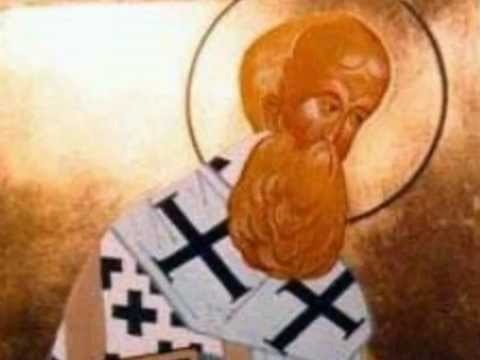
As the Dominican theologian Aidan Nichols describes the theology of St. Gregory of Nyssa in his book A Grammar of Consent, St. Gregory of Nyssa's "approach to God discovers transcendence through eros itself--seeing all finite human desire and finite human loving finally purified and satisfied in an endless movement of loving desire towards God." From this insight of St. Gregory of Nyssa, we may draw out a "converging and convincing proof" through reason alone, that God exists, and he is both the source and ultimate end of this love.

Highlights
Catholic Online (https://www.catholic.org)
11/5/2012 (1 decade ago)
Published in Year of Faith
Keywords: illative sense, God, natural theology, proofs of God, St. Gregory of Nyssa, Pope Benedict XVI, Deus Caritas Est, , Andrew M. Greenwell, Esq.
CORPUS CHRISTI, TX (Catholic Online) - "Desire is the very essence of man," the pantheistic philosopher Baruch Spinoza famously said in his Ethics. "All human activity is prompted by desire," the atheist Bertrand Russell stated in his Nobel Prize lecture.
Human desire is one of those universal human experiences upon which the illative sense can be applied to come to a conclusion, based upon reason alone, that there must be a God who is the source of, and ultimately the only satisfaction of, this desire. It sets us up for the possibility of faith in a revealing God.
In exploring the role of desire and how it points to the existence of God, we shall draw from the insights of St. Gregory of Nyssa (ca. 335 - ca. 395) and what we might call the "Nyssenian parts" of Pope Benedict XVI's encyclical Deus Caritas Est, Nos. 3-11.
As humans, we desire, and therefore love, many things, from the most mundane to the most honorable. We say we love red wine, our loyal Pekingnese (whose name is Moo-Shu), or a fine Cuban cigar given to us as a gift by Fr. James, with the same breath we say we love our wife and children. We clearly love things we apprehend as good.
But surely these goods, and therefore these loves, are not of the same order? Surely some loves are better than others?
As Pope Benedict XVI observes in his encyclical, Deus Caritas Est, love is a vague term, and includes everything from love of work, to love of family, love of friends, the love between a man and a woman, and even the love of God. Loves are legion.
The Greeks, who understood that there were different kinds of love, used a number of words to distinguish them: storge (love between family members), philia (love between friends), eros (love between a man and a woman), and agape (love between God and man).
Of the various loves known to all men and women, however, "one in particular stands out: love between man and woman, where body and soul are inseparably joined and human beings glimpse an apparently irresistible promise of happiness." This love between a man and a woman "would seem to be the very epitome of love; all other kinds of love immediately seem to fade in comparison." (Deus Caritas Est, 2)
This "epitome of love," as Pope Benedict XVI puts it, is the love the Greeks called eros.
Humans have always held eros in high regard; it is universally considered a great good worthy of great praise. The love between a man and a woman is the subject of poems, of plays, of songs too innumerable to count. All normal men and women have experienced this desire, this eros, and, even if they have not personally experienced it, certainly would hold it to be a great good, a great ideal, something to be desired.
The urge for eros is so strong, is a value so appreciated, that it seems to excuse all other realities, even law. It is a commonplace, a topos, to say that "all is fair in love and war," meaning that love (eros) is so strong as to virtually be its own law, its own justification.
Eros may therefore be said to be universally regarded as a great desirable. However, eros is also the kind of love that may be misdirected, even stunted or perverted, and so the eros that is the great desirable is a "disciplined and purified eros," not a "warped and destructive form of it," not an "intoxicated and undisciplined eros," and certainly not one "reduced to pure 'sex.'" (Deus Caritas Est, 4)
There is then a huge difference between eros purified and disciplined, and eros impure and undisciplined. Unfortunately, the latter seems to be the eros of the day. But even modernly, eros purified and disciplined is held out to be the ideal except by the most dissipated and the most craven among us, the misogynist, the androginist, the advocate of homosexual love, or the materialist who is convinced that eros is nothing more the a mix of chemicals and pheromones.
The "disciplined and purified eros" is an eros that arises when the human dimensions of both body and spiritual soul are "truly united." It is when body and soul are united in eros that the love between a man and woman attains "its authentic grandeur," and it such grandeur even intimates divine love. (Deus Caritas Est, 5)
When eros approaches its purified and disciplined state, it "seeks to become definitive," and it does so by "exclusivity," attaching to "this particular person alone," and by "being 'for ever.'" (Deus Caritas Est, 6)
Moreover, as it reaches its purified form, eros ceases to be self-regarding and results in a sort of "ongoing exodus out of the closed inward-looking self towards its liberation through self giving." Eros thus purified is no longer "self-seeking." Rather, eros purified "seeks the good of the beloved," it "becomes renunciation" of self, "and it is ready, and even willing for sacrifice." (Deus Caritas Est, 6)

Thus, a purified disciplined eros is faithful, exclusive, self-renouncing, other-regarding, and even sacrificial. And though it "embraces the whole of existence in each of its dimensions, including the dimension of time," it "looks to the eternal."
That this is our common experience is quite easy to establish. "Love" and "fidelity" and "sacrifice" and "forever" are commonly found together, in poems, in lyrics, and in our imagination, in our most inner desires and hopes, in the ideals we hold out for human love.
This is part of our human experience, and is something shared by all men, irrespective of faith. It is a part of reality, of what is. "That love between man and woman" which is called eros, "is neither planned nor willed" by us; it is something that "somehow imposes itself upon human beings." (Deus Caritas Est, 3)
What is this "somehow" that "imposes" love upon mankind? Is there a "someone" behind this "somehow"?
St. Gregory of Nyssa seized on the desire that is reflected in the love called eros, and ran with it to develop a rich philosophical theology. St. Gregory of Nyssa, it might be noted, was married to a woman named Theosebia, but his sister, St. Macrina, and his brother, St. Basil the Great, lived monastic lives. According to Aidan Nichols it was the "combination of awareness of the world, with its own varied loves, and intimate acquaintance with the monastic life, with its unum necessarium, the love of God, that provided the impetus for Gregory's own philosophizing."
As Aidan Nichols describes the Nyssenian theology in his book A Grammar of Consent, St. Gregory of Nyssa's "approach to God discovers transcendence through eros itself--seeing all finite human desire and finite human loving finally purified and satisfied in an endless movement of loving desire towards God." From this insight of St. Gregory of Nyssa, we may draw out a "converging and convincing proof" through reason alone, that God exists, and he is both the source and ultimate end of this love.
As Aidan Nichols puts it, from his observation of the world about him, St. Gregory "disengaged the theme of eros," and saw "humankind as desire." This suggests that man and his desiring is something recognized as a universal, as the theist St. Gregory, along with the pantheist Spinoza and the atheist Russell whom we quoted at the beginning of this article, all saw humanity as "a living flame of desiring."

St. Gregory, however, saw something "behind" desiring that neither Spinoza nor Russell saw because they blinded themselves to the greater reality by failing to use the illative sense in its fullness.
What St. Gregory of Nyssa saw was this: the fact that we desire at all means that we are essentially incomplete beings. We are unfinished. If we were self-sufficient, if we were our own good, if we were already finished, we would not have any desire. The reason for this is that desire is nothing less than a yearning for a good which we do not possess.
St. Gregory of Nyssa saw that the fact that we all experience desire, the fact that we are erotic beings, is witness to a reality that we are incomplete and that something within us yearns for and requires someone not ourselves which we need to complement us, to complete us.
"For man is essentially erotic: man is openness, wanting, and thirsting to be filled," is the insight that St. Gregory of Nyssa had in the words of Aidan Nichols. It is this fact where "Gregory finds the point of insertion of the divine into the human."
St. Gregory saw meaning behind this inability of finite, created goods to satisfy human desire, and this included even that epitome of all loves, that love between a man and a woman, eros purified
From this inability of even the best human good--the love between a man and a woman at its best, eros purified--to satisfy, St. Gregory saw a signpost, a signpost which pointed "irresistibly towards an infinite satisfaction, namely, God."
"The Absolute," which is to say God, was for Gregory of Nyssa "revealed in the simultaneous actuality of our manifold varied loves and our awareness that nothing finite will ever satisfy them." Nothing on earth, even that greatest of all loves and desires, the love of a man and woman, completes us, satisfies us.
This, of course, begs the question: what, if anything, will satisfy the desires of mankind when the greatest love it has cannot?
Reason did not seem to have an answer, but it certainly raised the question.
For St. Gregory of Nyssa, the answer to that very question suggested some sort of answer, and the answer had to be seized by faith because it went beyond our experience and our reason. The answer to unsatisfied love was a different kind of love, the love which is the source of all loves, even of eros: agape.

What St. Gregory of Nyssa propose is in reality a proof of the existence of God.
Pope Benedict XVI therefore did something very Nyssenian when he authored his encyclical Deus Caritas Est, an encyclical where desire--eros--plays a central role (the word eros is used 34 times in the encyclical) and is tied to agape (which is used 19 times).
In Deus Caritas Est, Pope Benedict XVI suggests that there is a sort of analogical relationship between eros and agape. This is suggested by the very subtitle which introduces the topic of eros and its relationship to agape. Pope Benedict sees that there is both diversity and a unity, diversitas et unitas, between eros and agape, between the epitome of human love and divine love.
This language--diversity and unity--is the language of analogy, and so we may say that Pope Benedict XVI is teaching that there is a real analogy, an analogy of proportionality, between eros and agape. This means that there is a likeness between eros and agape, although the unlikeness between eros and agape remains infinitely greater than their likeness.
There is an analogy of proportionality between the chaste and faithful love of a man and a woman in marriage, and the love that God has for mankind, and, in particular, His Church. Human eros, then, is witnesses to, points to, and is an image of Divine agape.
This analogy of love is seized on by the writer of the Songs of Songs, an Old Testament book so beloved by the Church's mystics. The Song of Songs is a dance of two loves: the love of eros (in Hebrew, dodim) and the love of agape (in Hebrew ahabĂ ). This analogy of love is central to St. Paul's theology: "Husbands, love your wives, just as Christ also loved the Church and gave himself up for her." (Eph. 5:25)
The light of reason alone applied to human desire, in particular to purified eros, allows us to see that purified eros, a created reality, is an image, an analogue, of He who is love, agape, the uncreated Love who, as the medieval Cistercian monk Blessed Isaac of Stella put it in one of his sermons (43.20), is the unfailing and never-ending fount of all love, the fons indeficiens caritatis.
Eros, which Pope Benedict XVI calls "ascending love" and which, in its impure and undisciplined stages, is marked by the desire of possession, of covetousness from which is must be purged, is eventually met by agape, the love of oblation or selflessness which has only the good of the other in mind, and which Pope Benedict XVI calls "descending love."

The sacred writers recognized that there is an inextricable link, an analogical link, between this human, creaturely, and wholly immanent reality--desire as eros--which we know through experience, and the divine, uncreated, and wholly transcendent reality--desire as agape--which we do not know through experience but whose existence we can infer through our illative sense.
Man, who is nothing but a fount of desires, remains unfulfilled, "guttering when fed with the oil of any finite, created satisfaction," as Nichols puts it quaintly, and this points "irresistibly toward an infinite satisfaction, namely God."
And has this God, who reason posits as the only thing that can satisfy our yearning, come to us? Can it be that the "ascending love" of man has met, or can meet, the "descending love" of God?
The answer to reason's question is, yes. But the answer to reason's question is gained not by reason, but by faith. By faith we come to see that the two loves of eros and agape have met in the Word made Flesh, Jesus, who may be said to be the hypostatic union of human purified eros and pure divine agape. Jesus is man's greatest love, and God's greatest love, all united in one person.
The reality of agape, a loved guessed at, hinted at by the inability of even a purified eros to satisfy the desire of mankind, presents itself to us through a most purified human eros in the human nature of Jesus. By placing our faith in Jesus, the God-man who reconciles human "ascending love" with divine "descending love," the lack that seems intrinsic in the most pure of human loves is given its divine plenishment in agape. In Jesus, eros and agape kiss, just like justice and mercy kiss. (Cf. Ps. 85[84]:11) The eros of human nature is lifted up by the grace of agape.
In Christ, the yearning of love's desire is fulfilled.
-----
Andrew M. Greenwell is an attorney licensed to practice law in Texas, practicing in Corpus Christi, Texas. He is married with three children. He maintains a blog entirely devoted to the natural law called Lex Christianorum. You can contact Andrew at agreenwell@harris-greenwell.com.
---
'Help Give every Student and Teacher FREE resources for a world-class Moral Catholic Education'
Copyright 2021 - Distributed by Catholic Online

Come Grow With Us
Sign up and walk the Catholic journey with millions around the world.
Receive inspiring emails on saints, daily readings, and free faith-building resources—no cost, ever.
Sister Sara Has One Message for Every Catholic Family This June
- Easter / Lent
- 5 Lenten Prayers
- Ash Wednesday
- 7 Morning Prayers
- Mysteries of the Rosary
- Litany of the Bl. Virgin Mary
- Popular Saints
- Popular Prayers
- Female Saints
- Saint Feast Days by Month
- Stations of the Cross
- St. Francis of Assisi
- St. Michael the Archangel
- The Apostles' Creed
- Unfailing Prayer to St. Anthony
- Pray the Rosary











Copyright 2026 Catholic Online. All materials contained on this site, whether written, audible or visual are the exclusive property of Catholic Online and are protected under U.S. and International copyright laws, © Copyright 2026 Catholic Online. Any unauthorized use, without prior written consent of Catholic Online is strictly forbidden and prohibited.
Catholic Online is a Project of Your Catholic Voice Foundation, a Not-for-Profit Corporation. Your Catholic Voice Foundation has been granted a recognition of tax exemption under Section 501(c)(3) of the Internal Revenue Code. Federal Tax Identification Number: 81-0596847. Your gift is tax-deductible as allowed by law.