We ask you, urgently: don't scroll past this
Dear readers, Catholic Online was de-platformed by Shopify for our pro-life beliefs. They shut down our Catholic Online, Catholic Online School, Prayer Candles, and Catholic Online Learning Resources essential faith tools serving over 1.4 million students and millions of families worldwide. Our founders, now in their 70's, just gave their entire life savings to protect this mission. But fewer than 2% of readers donate. If everyone gave just $5, the cost of a coffee, we could rebuild stronger and keep Catholic education free for all. Stand with us in faith. Thank you.Help Now >
FRIDAY HOMILY: All Souls Day - Joining Them on the Journey
FREE Catholic Classes
The custom of remembering the faithful departed goes back to the early days of the church, when their names were posted in the church so they could be remembered. As early as the sixth century, monasteries held special days of remembrance for the dead from their community and by the ninth century they were commemorating all the faithful departed.

Highlights
Catholic Online (https://www.catholic.org)
11/2/2012 (1 decade ago)
Published in Year of Faith
Keywords: All Souls' Day, All Saints, Faithful Departed, Beatific Vision, purgatory, Fr. Randy Sly
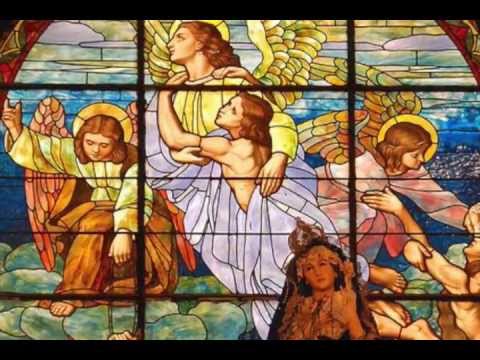
P>WASHINGTON, DC (Catholic Online) - Today is the Commemoration of All the Faithful Departed, more commonly known as All Souls' Day. While not a day of Holy Obligation like yesterday's Feast of All Saints, a day focused on the Church in Heaven, this is a day of holy opportunity to remember the souls of some of the departed, the Church in Purgatory.
The custom of remembering the faithful departed goes back to the early days of the church, when their names were posted in the church so they could be remembered. As early as the sixth century, monasteries held special days of remembrance for the dead from their community and by the ninth century they were commemorating all the faithful departed.
The Catechism of the Catholic Church, citing Pope St Gregory the Great, explains: "All who die in God's grace and friendship, but still imperfectly purified, are indeed assured of their eternal salvation; but after death they undergo purification, so as to achieve the holiness necessary to enter the joy of heaven."
"The Church gives the name Purgatory to this final purification of the elect, which is entirely different from the punishment of the damned. ( Cf. 1 Cor 3:15; 1 Pet 1:7).The Church formulated her doctrine of faith on Purgatory especially at the Councils of Florence and Trent. The tradition of the Church, by reference to certain texts of Scripture, speaks of a cleansing fire:
"As for certain lesser faults, we must believe that, before the Final Judgment, there is a purifying fire. He who is truth says that whoever utters blasphemy against the Holy Spirit will be pardoned neither in this age nor in the age to come. From this sentence we understand that certain offenses can be forgiven in this age, but certain others in the age to come." (Pope St. Gregory the Great) (CCC#1030, 1031)
The days of commemoration varied although, over time, most began to use November 2.
In the fifteenth century, the Dominicans began offering three Masses on the Feast of All Souls. Then, in 1748, Pope Benedict XIV approved this practice, which caused it to quickly spread throughout Spain, Portugal and into Latin America.
The outbreak of World War I - the "war to end all wars" - provided Pope Benedict XV with a strong incentive to further define this feast day and he gave his priests permission to offer three Masses that day. He saw that it was hard to remember all the war dead, especially due to the number of churches that had been destroyed. The Pope instructed his clergy that the three Masses should be offered as follows: one for the particular intention of the day, one for the faithful departed and one for the intentions of the Holy Father.
Mexico, other Latin American countries and even other cultures observe the Day of the Dead (DĂa de los Muertos), covering both All Saints and All Souls. On November 1 they honor departed children and adults are remembered on November 2. Spending the entire day at cemeteries, people build small shrines, with food, beverages, photos and other keepsakes of loved ones.
While it is good to remember the departed faithful as they were in this life during the Feast of All Souls, we must be sure that our main focus remains on their time of preparation for heaven in purgatory.
Purgatory - what a strange and scary sounding word to some. Unfortunately, there has been a lot of misunderstanding concerning this doctrine and what it means for us as Christians. Some have thought that we "go" to purgatory and then we are judged whether we go to heaven or hell. Others see this as a mini-hell for those who didn't quite make it all the way into heaven. Still others see purgatory as a second chance after death.
Along with other misinterpretations, these have been used by Protestants and others over the years as a reason to wonder about those of us who are Catholic. I know I was confused for several years!
So what about purgatory? Why, on this day, should we focus on the dead?
To begin with, let's look at the word "purgatory." This comes from the old Latin word "purgare," which means "to cleanse" or "to purge." So you can think of purgatory as a time of cleansing or final purification in preparation to spend eternity in the presence of God. In purgatory, as the Catechism explains, the faithful - that's right, those who are destined for heaven - "achieve the holiness necessary to enter the joy of heaven." (CCC 1030)
The Catechism goes on to say: "The Church gives the name Purgatory to this final purification of the elect, which is entirely different from the punishment of the damned. The Church formulated her doctrine of faith on Purgatory especially at the Councils of Florence and Trent. The tradition of the Church, by reference to certain texts of Scripture, speaks of a cleansing fire. (CCC 1032)
St. Paul writes of this in his first letter to the Corinthians.
"For we are God's co-workers; you are God's field, God's building. According to the grace of God given to me, like a wise master builder I laid a foundation, and another is building upon it. But each one must be careful how he builds upon it, for no one can lay a foundation other than the one that is there, namely, Jesus Christ. If anyone builds on this foundation with gold, silver, precious stones, wood, hay, or straw, the work of each will come to light, for the Day will disclose it. It will be revealed with fire, and the fire [itself] will test the quality of each one's work." (I Cor. 3:9-13)
In a homily based on this Scripture, St. John Chrysostom wrote, "As for certain lesser faults, we must believe that, before the Final Judgment, there is a purifying fire. He who is truth says that whoever utters blasphemy against the Holy Spirit will be pardoned neither in this age nor in the age to come. From this sentence we understand that certain offenses can be forgiven in this age, but certain others in the age to come."
In his book on "Eschatology," Pope Benedict XVI (then Cardinal Joseph Ratzinger) further clarifies the church's teaching in this area: "Purgatory is not, as Tertullian thought, some kind of supra-worldly concentration camp where one is forced to undergo punishments in a more or less arbitrary fashion.Rather it is the inwardly necessary process of transformation in which a person becomes capable of Christ, capable of God [i.e., capable of full unity with Christ and God] and thus capable of unity with the whole communion of saints.
"Simply to look at people with any degree of realism at all is to grasp the necessity of such a process. It does not replace grace by works, but allows the former to achieve its full victory precisely as grace. What actually saves is the full assent of faith. But in most of us, that basic option is buried under a great deal of wood, hay and straw. Only with difficulty can it peer out from behind the latticework of an egoism we are powerless to pull down with our own hands."
"Man is the recipient of the divine mercy, yet this does not exonerate him from the need to be transformed. Encounter with the Lord (is) this transformation. It is the fire that burns away our dross and re-forms us to be vessels of eternal joy."
Catholic lay apologist James Akin calls purgatory the "boot camp of heaven." I like that analogy. No matter what your physical condition prior to entering the military, boot camp is to bring everyone to the same level of physical and mental fitness for service. The same can be said for heaven. To enter into the beatific vision, the immediate and intimate knowledge of God which the angelic spirits and the souls of the just enjoy in Heaven, one must be prepared.
There are a few things we ought to remember on this Feast of All Souls.
Jesus Christ Fully Completed Our Redemption on the Cross

Purgatory has nothing to do with our redemption. It is a finished work that needs nothing else from us to be accomplished. St. John, in his first epistle, says it this way, "In this is love: not that we have loved God, but that he loved us and sent his Son as expiation [Ed. - atonement, satisfaction] for our sins." (I Jn. 4:10, NAB)
In verses 10 and 11 of the next chapter, the apostle goes on to say, "And this is the testimony: God gave us eternal life, and this life is in his Son. Whoever possesses the Son has life; whoever does not possess the Son of God does not have life."
Purgatory, then, is about our purification and preparation. Most Christians would accept the fact that all of us can sin due to our corrupted nature - what we would call venial sins - up to the moment of our death. So what we are dealing with is the application of His redemption to our fallenness.
We would also agree that we will not be sinning in heaven. Therefore, there is some purification that must take place, where grace is not only applied to our sin but the stain of sin and the corruption. The refiner's loving fire to make us fit for heaven. This is purgatory.
Purgatory Does Not Actually Involve an Amount of Time
Time is a construct that exists on this side of death. When we enter eternity, measurable time - as we know it - stops. When we talk about time with respect to the purification of the faithful departed in purgatory, it actually refers to the desire we have to ease of the pain of purification.
Many people still talk about "days" when it comes to purgatory, a concept which was originally a part of explaining the effects of indulgences (If you are unsure what these are, this is something we'll need to discuss at another time). This is why that measure is no longer used.
Some would argue that purification would be instantaneous, which is again a measurement of time. We really can't speak of this process in terms of an interval; it is a personal involvement, and experience.
In his wonderful encyclical letter, Saved by Hope, Pope Benedict XVI writes: "It is clear that we cannot calculate the "duration" of this transforming burning in terms of the chronological measurements of this world. The transforming "moment" of this encounter eludes earthly time-reckoning-it is the heart's time, it is the time of "passage" to communion with God in the Body of Christ".
Purgatory calls us to remember that sin contains a double consequence (CCC #1472). There is the eternal punishment, for which Christ has already atoned. Further, there is a temporal punishment; what we might call the stain of sin, something unhealthy that attaches to us. It is for this temporal punishment, that purgatory is our means of refinement.
All we know is that we will have a profound encounter with Christ's divine love that will be our refiner's fire, consuming all the wood, hay and dross. Like the detergent commercial where people are asked to compare which clothing looks the whitest, the light of His love will show every spot, wrinkle and blemish.The stain of sin and our impurities will be removed that we might be made ready for eternity.
We Can Participate in the Lives of Those Who Are Going Through Purification
What we do here on earth can count for our loved one's in purgatory. This is one of the beautiful dimensions of All Souls' Day; when we are reminded that we, who are with the Church militant, can make a difference in the lives of those in the Church triumphant who are experiencing the refiner's fire.
We are a part of the Church's treasury, explained beautifully in the Catechism.
"The Christian who seeks to purify himself of his sin and to become holy with the help of God's grace is not alone. 'The life of each of God's children is joined in Christ and through Christ in a wonderful way to the life of all the other Christian brethren in the supernatural unity of the Mystical Body of Christ, as in a single mystical person.'
"In the communion of saints, 'a perennial link of charity exists between the faithful who have already reached their heavenly home, those who are expiating their sins in purgatory and those who are still pilgrims on earth. Between them there is, too, an abundant exchange of all good things.' In this wonderful exchange, the holiness of one profits others, well beyond the harm that the sin of one could cause others. Thus recourse to the communion of saints lets the contrite sinner be more promptly and efficaciously purified of the punishments for sin." (CCC 1474, 1475)
This treasury is made up, then, of the Masses, the Rosaries, the sacrifices and all other prayers, along with works in charity and spiritual service offered for the intention of the ones departed.

Today, take time to remember the poor souls in purgatory; members of your family, your friends and others that have crossed your path before they entered death's door. Pray for them. They are poor because they have yet to see the heavenly vision that awaits them not because they are destitute or hopeless. In fact, they are filled with hope and joy as their destiny has been sealed. They will see him face to face.
On this day when we remember all the faithful departed, let us never think that people are dead and gone. They have entered into their eternity. As Sir Walter Scott penned, "Is death the last sleep? No--it is the last and final awakening." Let us also remember that purgatory is a doctrine of love, the love of a God who wants us to be truly free - and find our completion and joy in His eternal embrace of communion.
-----
Father Randy Sly is the Associate Editor of Catholic Online and a priest with the Personal Ordinariate of the Chair of St. Peter (http://usordinariate.org) established by the Holy Father, Pope Benedict XVI, through the Apostolic Constitution "Anglicanorum Coetibus."
---
'Help Give every Student and Teacher FREE resources for a world-class Moral Catholic Education'
Copyright 2021 - Distributed by Catholic Online
Come Grow With Us
Sign up and walk the Catholic journey with millions around the world.
Receive inspiring emails on saints, daily readings, and free faith-building resources—no cost, ever.
Sister Sara Has One Message for Every Catholic Family This June
- Easter / Lent
- 5 Lenten Prayers
- Ash Wednesday
- 7 Morning Prayers
- Mysteries of the Rosary
- Litany of the Bl. Virgin Mary
- Popular Saints
- Popular Prayers
- Female Saints
- Saint Feast Days by Month
- Stations of the Cross
- St. Francis of Assisi
- St. Michael the Archangel
- The Apostles' Creed
- Unfailing Prayer to St. Anthony
- Pray the Rosary









Copyright 2026 Catholic Online. All materials contained on this site, whether written, audible or visual are the exclusive property of Catholic Online and are protected under U.S. and International copyright laws, © Copyright 2026 Catholic Online. Any unauthorized use, without prior written consent of Catholic Online is strictly forbidden and prohibited.
Catholic Online is a Project of Your Catholic Voice Foundation, a Not-for-Profit Corporation. Your Catholic Voice Foundation has been granted a recognition of tax exemption under Section 501(c)(3) of the Internal Revenue Code. Federal Tax Identification Number: 81-0596847. Your gift is tax-deductible as allowed by law.