 Dear readers, Catholic Online was de-platformed by Shopify for our pro-life beliefs. They shut down our Catholic Online, Catholic Online School, Prayer Candles, and Catholic Online Learning Resources essential faith tools serving over 1.4 million students and millions of families worldwide. Our founders, now in their 70's, just gave their entire life savings to protect this mission. But fewer than 2% of readers donate. If everyone gave just $5, the cost of a coffee, we could rebuild stronger and keep Catholic education free for all. Stand with us in faith. Thank you. Help Now >
Goodbye to My Friend: The Slow Dying of Alleluia
FREE Catholic Classes
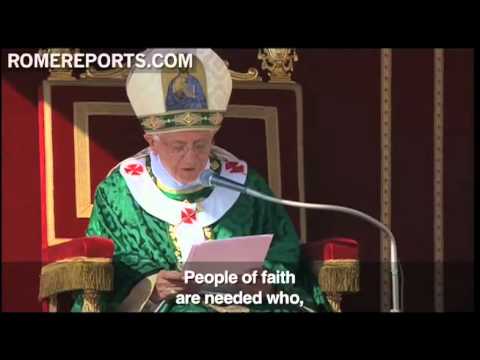
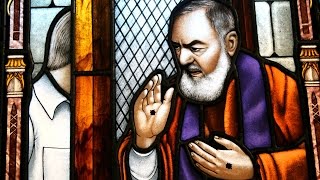
This slow liturgical dying of the Alleluia is a symbol of the slow dying of the light of Faith in the West. Without Faith, we cannot worship. Without Faith, Alleluias will slowly die away. This is precisely what Pope Benedict XVI wants us to remedy this year, in this Year of Faith.

Highlights
Catholic Online (https://www.catholic.org)
2/7/2013 (1 decade ago)
Published in Year of Faith
Keywords: depositio alleluia, Lent, Septuagesima, penance
CORPUS CHRISTI, TX (Catholic Online) - Of late, I have on Sundays been frequenting the traditional Latin Mass, the "extraordinary form of the Roman Rite," popularly called the Tridentine rite. At the same time, I have been praying the Liturgy of the Hours which, of course, follows the calendar of the Novus Ordo which implements the liturgical reforms implemented after Vatican II. A liturgical purist would probable view this as unseemly since I am straddling orders, but the exercise has been to some benefit.
A couple of Sundays ago, it was Septuagesima Sunday in the traditional rite. In the traditional calendar, Septuagesima Sunday ushered in a pre-Lenten season known as Septuagesimatide or Shrovetide. Seventy liturgical days before Easter (Septuagesima means "seventy"), the priest wears purple vestments to remind us that Lent is coming, and on this Sunday worshipers begin fasting from the Alleluia.
Under the old rite, from Septuagesima Sunday until the Easter Vigil, the Alleluia was no longer use in the liturgy. This custom is known as the depositio Alleluia, the laying down, the giving up, or the lowering (as if into a grave) of the Alleluia.
Under the new, ordinary rite, the depositio Alleluia does not begin until Lent itself, in other words, on Ash Wednesday. So until Ash Wednesday, I will not experience a full depositio or death of the Alleluia, but perhaps something more like a moriens Alleluia, a liturgical fading away or dying of the Alleluia.
Instead of the Alleluia being lowered and folded up like a flag given the parents of a fallen marine, for three weeks the Alleluia will be flown at half-mast, and that three-week interlude has made me value that Hebrew word of praise which speaks of the things of heaven even more.
In his commentaries on the Divine Office, Rationale Divinorum Officiorum, the 13th century bishop of the diocese of Mende in the province of Narbonne in Southern France, William Durandus wrote regarding the depositio Alleluia: "We part from the alleluia as from a beloved friend, whom we embrace many times and kiss on the mouth, head, and hand, before we leave him."
While in the past I have experienced the sudden liturgical death of the Alleluia, I have never experienced what we might call the liturgical slow dying of the Alleluia. I am watching my dear friend slowly die, like I watched my mother and father slowly die, and it pains me.
This slow liturgical dying of the Alleluia is a symbol of the slow dying of the light of Faith in the West. Without Faith, we cannot worship. Without Faith, Alleluias will slowly die away. This is precisely what Pope Benedict XVI wants us to remedy this year, in the Year of Faith. Pope Benedict XVI knows that:
The dead [in faith] shall not praise thee, O Lord;
Nor any of them that go down to hell. (Ps. 115:17 [113:25])
The Alleluia is one of those rare words--like Amen or Sabbaoth--that have remained untranslated in the liturgy from their original Hebrew. Alleluia is a transliteration of the Hebrew word which means "Praise Yah," short for "Praise Yahweh," or "Praise He who is." It is a word that is intended to contain within it the meaning of unspeakable joy, and a foretaste of heaven.
As St. Augustine says in one of his sermons, it will be in heaven that our entire activity will be Amen and Alleluia. Tota action nostra, amen et alleluia erit. As the 11th century hymn Alleluia dulce carmen (Alleluia Song of Sweetness) puts it:
Alleluia dulce carmen,
Vox perennis gaudii,
Alleluia laus suavis
Est choris coelestibus,
Quam canunt Dei manentes
In domo per saecula.
Alleluia, song of sweetness,
Voice of joy that cannot die;
Alleluia is the anthem
Ever raised by choirs on high;
In the house of God abiding
Thus they sing eternally.
While in heaven the life of the saved will be all Amen and all Alleluia as St. Augustine notes (cf. also Rev. 19:1-4), in this valley of tears there are things that can separate us from God and hence from the hope of salvation and eternal life.
It is precisely these separating things that our fasting from the Alleluia is intended to remind us to focus on. In all we believe and all we do, we must say "Amen"--so be it!--to God in this life if we are to say that word of joy "Alleluia" in the next. Tristitia vestra, alleluia, vertetur in gaudium, alleluia. Your sorrow, alleluia, shall be turned into joy, alleluia.
Therefore, we must know the Church's Faith, and know the Church's teachings on morals, and we must learn to live them with absolute integrity as we bind ourselves in love more completely to Jesus the Lord, the only Word of God made Flesh. This, in a nutshell, is what the Year of Faith is about.
The liturgical asceticism associated with the depositio Alleluia is a self-imposed penance. It is intended to instill the truth in us that we alone are not worthy to worship God. Unaided, we cannot make ourselves worthy to worship God. We need God's help--his Grace--to make us worthy to worship Him. We need God's worship--the Sacrifice of the Cross, made present during Mass--worthily to worship God the Blessed Trinity.
During Lent, we are asked by Holy Mother Church to look at our lives and to ask God to make us worthy to worship Him, to come more fully into his Grace, more fully out of the darkness and more clearly into His Light.
As the hymn Alleluia dulce carmen instructs us:
Alleluia non meremur
In perenne psallere;
Alleluia vo reatus
Cogit intermittere;
Tempus instat quo peracta
Lugeamus crimina.
Alleluia cannot always
Be our song while here below;
Alleluia our transgressions
Make us for awhile forgo;
For the solemn time is coming
When our tears for sin must flow.
We are to sorrow at our failure to live the Alleluia. We are to sorrow at our lack of Faith in the Lord, at our failure to abide by his commandments, at our failure to abide in and fully submit and apply, the teachings and discipline of the teaching Church, at our failure to love the Lord our God with all our hearts, all our minds, all our soul, and all our strength. (Luke 10:27; cf. Matt. 22:37, Mark 12:30) What is the part of us where there may be found anything less than the all? Lent is the time to ferret it out.
How many of us have been like Christ, who is all "yes" to God, and there is no "yes" and "no" in him? (2 Cor. 1:19) What are the parts of us that say "no" to God? Lent is the time to find that "no," and to make the "no" into a "yes."
Wherever there is in us a less than all, wherever there is the least bit of "no," we have separated ourselves that much from God; there is part of us exiled from God. That part withheld so as to be less than our all, that part of our soul where there is the least bit of "no" is, in a manner of speaking, exiled in Babylon and away from Jerusalem and Mount Zion. This is precisely the message of the hymn Alleluia dulce carmen:
Alleluia laeta mater
Concivis Jerusalem:
Alleluia vox tuorum
Civium gaudentium:
Exsules nos flere cogunt
Babylonis flumina.

Alleluia, joyful mother,
Fellow-citizen of Jerusalem
Alleluia, the word of thy
rejoicing citizens
We in exile gather to weep
At the rivers of Babylon
We ought to have that sorrowful pining for God that the Psalmist did who was exiled for seventy years from Jerusalem--the seventy years for the Jew is symbolized in Septuagesima Sunday's "seventy" liturgical days to Easter:
By the rivers of Babylon, there we sat down and wept,
When we remembered Zion.
We hanged our harps upon the willows, in the midst thereof.
. . . .
How shall we sing the song of the Lord in a strange land?
If I forget you, Jerusalem, let my right hand wither.
May my tongue cling to the roof of my mouth, if I do not remember you;
If I do not prefer Jerusalem above my chief joy. (Ps. 137 [136]:1-2, 4-6)
We ought to take that part of us that is less than our all to God, that part of us which is a "no" to God--the children of Babylon in us--and dash these little ones against the rock. (Ps. 137[136]:9) That in us that makes us give less than all to God, that in us which is a "no" to God, regardless of how small, has no right to live.
It is this rigorous examination of our lives symbolized by the depositio Alleluia that justifies its triumphant return in Easter. The ancient Gothic liturgy in Spain touchingly personalized this absence of the Alleluia, who, like Lazarus, was sure to rise again. The Alleluia's absence was only for a time:
Thou shalt go, Alleluia; thy journey shall be prosperous, Alleluia;
And again come back to us with joy, Alleluia.
For they shall bear thee up in their hands,
Lest at any time thou dash thy foot against a stone.
And again come back to us with joy, Alleluia.
For each part of us that is less than our all that we, by the grace of God and the work of the Holy Spirit, are able to give to God, for each "no" in us that we make into a "yes," we have turned from sickness and death, to resurrection and thereby participate in the victory of the Lord over sin and death.
Unde laudando precamur
Te beata Trinitas,
Ut tuum nobis videre
Pascha des in aethere,
Quo tibi laeti canamus
Alleluia perpetim.
Whence in praising we beseech
Thee, blessed Trinity,
That thou grant to us
to see Thy Easter in heaven
Where we joyful may sing
Alleluia to thee perpetually.

Let us this Year of Faith scrutinize ourselves with heightened vigor, so that we may liturgically rise with Christ on Easter, and proclaim with the Church our victory over our own sin and death. May our all to God be really our all, may any "no" to God be made "yes," and may we then be worthy to utter those words of joy and comfort:
The Lord has risen!
He has risen indeed!
Alleluia, alleluia, alleluia!
-----
Andrew M. Greenwell is an attorney licensed to practice law in Texas, practicing in Corpus Christi, Texas. He is married with three children. He maintains a blog entirely devoted to the natural law called Lex Christianorum. You can contact Andrew at agreenwell@harris-greenwell.com.
---
'Help Give every Student and Teacher FREE resources for a world-class Moral Catholic Education'
Copyright 2021 - Distributed by Catholic Online
Come Grow With Us
Sign up and walk the Catholic journey with millions around the world.
Receive inspiring emails on saints, daily readings, and free faith-building resources—no cost, ever.
Sister Sara Has One Message for Every Catholic Family This June
- Easter / Lent
- 5 Lenten Prayers
- Ash Wednesday
- 7 Morning Prayers
- Mysteries of the Rosary
- Litany of the Bl. Virgin Mary
- Popular Saints
- Popular Prayers
- Female Saints
- Saint Feast Days by Month
- Stations of the Cross
- St. Francis of Assisi
- St. Michael the Archangel
- The Apostles' Creed
- Unfailing Prayer to St. Anthony
- Pray the Rosary









Copyright 2026 Catholic Online. All materials contained on this site, whether written, audible or visual are the exclusive property of Catholic Online and are protected under U.S. and International copyright laws, © Copyright 2026 Catholic Online. Any unauthorized use, without prior written consent of Catholic Online is strictly forbidden and prohibited.
Catholic Online is a Project of Your Catholic Voice Foundation, a Not-for-Profit Corporation. Your Catholic Voice Foundation has been granted a recognition of tax exemption under Section 501(c)(3) of the Internal Revenue Code. Federal Tax Identification Number: 81-0596847. Your gift is tax-deductible as allowed by law.