We ask you, urgently: don't scroll past this
Dear readers, Catholic Online was de-platformed by Shopify for our pro-life beliefs. They shut down our Catholic Online, Catholic Online School, Prayer Candles, and Catholic Online Learning Resources essential faith tools serving over 1.4 million students and millions of families worldwide. Our founders, now in their 70's, just gave their entire life savings to protect this mission. But fewer than 2% of readers donate. If everyone gave just $5, the cost of a coffee, we could rebuild stronger and keep Catholic education free for all. Stand with us in faith. Thank you.Help Now >
Converging and Convincing Proof of God: Perfection is Real
FREE Catholic Classes
St. Anselm went from faith and from prayer to reason in a sort of existential continuum. But there is no reason that one cannot take his proof and step up by the use of reason alone to see that it is reasonable to believe in God, and then from that threshold to take the further step further by an act of faith and prayer.
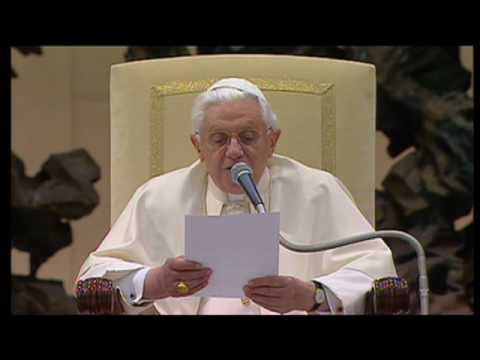

Highlights
Catholic Online (https://www.catholic.org)
11/12/2012 (1 decade ago)
Published in Year of Faith
Keywords: illative sense, God, natural theology, proofs of God, St. Anselm, Ontological Proof, Andrew M. Greenwell, Esq.
CORPUS CHRISTI, TX (Catholic Online) - In prior articles of this series on converging and convincing proofs of God, we have spoken about the illative sense. Following that, we explored proofs of God's existence based upon the existence of desire and truth. In this installment, we will focus on a unique argument, the "unum argumentum," that came to St. Anselm of Canterbury (ca. 1033-1109) one day in sudden inspiration after praying Matins, and which he bequeathed to us in the work entitled Proslogion. It has been called the ontological argument.
In itself, the argument is quite simple.
It starts with a definition of God, a definition that can be accepted by anyone, including the fool who says in his heart that there is no God. (Cf. Ps. 14:1).
God is defined as "that than which a greater cannot be thought," aliquid quo nihil maius cogitari possit. This is a being with the fullness of perfection, of power, of intelligence, of truth, and of love. There is no perfection that can be thought of which is not present in that than which a greater cannot be thought.
Importantly, even an atheist can understand such a concept. That sort of concept exists in his mind, although he would deny (though, as St. Anselm would show, inconsistently) that the being identified by such a concept has existence outside his mind.
The atheist can also conceive in his mind the possibility that such a perfect being can exist outside of his mind, if for no other reason than to deny it. (How can he deny it, if he cannot conceive that that than which no greater can be thought may also exist?) So the atheist can conceive that "that than which a greater cannot be thought" can exist both in his mind and outside of his mind, that is to say in reality also.
This puts the atheist in an immediate quandary because he has two thoughts in his mind that contradict each other.
He has in his mind the concept "that than which a greater cannot be thought" as existing only in his own mind (in intellectu), and "that than which a greater cannot be thought" as existing in his own mind and in reality (in intellectu and also in re). Yet something existing both in the mind and in reality is greater than something only existing in the mind and not existing in reality.
He cannot hold both concepts simultaneously, and the former must yield to the latter, and so that than which a greater can be thought must exist both in the mind and in reality. This necessarily means that God exists in reality.
"If," St. Anselm observes, "that than which a greater cannot be thought exists in the mind alone, this same thing than which a greater cannot be thought is that than which a greater can be thought," namely that that which a greater cannot be thought exists both in the mind and reality. "But this is obviously impossible," St. Anselm concludes.
"Therefore there is absolutely no doubt that something than which a greater cannot be thought exists both in the mind and in reality."
In other words, the very thought of the concept of God would seem to require, as a necessary corollary, that God also exists. This is the only way to avoid the quandary.
The proof has given many doubters many fits. Even the atheist Bertrand Russell is said to have exclaimed one day after having bought a tin of tobacco, "Great God in Boots!--the ontological argument [of St. Anselm] is sound!" But it didn't seem to dissuade him from his disbelief, though he admitted that "it is easier to feel convinced that [the ontological argument of St. Anselm] must be fallacious than it is to find out precisely where the fallacy lies."
Frequently, Immanuel Kant has been invoked to disprove St. Anselm's ontological proof. Kant's argument against St. Anselm works if existence adds something to the concept in the mind, for then the two concepts are different, and being different cannot contradict each other. But Kant's disproof fails if we understand St. Anselm to mean that existing in reality (in re) "means belonging to experience as a whole, which experience cannot but be informative about the realm of the real."
According to Aidan Nichols, St. Anselm's argument is "founded upon the language of perfection." St. Anselm's definition of God--that than which a greater cannot be conceived--is equivalent to proposing the "the unconditionally perfect." If, we can talk of God in this way, and if we can conceive of God in this way, then Anselm's proof "rules out the possibility of intelligently denying God's existence."
Only a fool--if he can conceive of the concept "that than which a greater cannot be thought" in his mind--can also set his face against such a concept existing in reality, in other words having a basis in experience as a whole. He would be placed in the quandary of admitting perfection has a basis in reality and denying perfection has a basis in reality. As Aidan Nichols puts it: "It does not make sense to deny the purchase on reality of the language of unsurpassable perfection."

Aidan Nichols explains why the language of perfection suggests the reality of perfection. Language dealing with external objects (say, for example, an apple) participates in a "shared public realm," in other words, something outside the self. Otherwise, we would not be able to communicate with each other, for language, if not about something outside of us, would be meaningful only to one's self. But it's clearly not.
When we use a word such as "apple," it has a meaning for us, but it also has a public meaning, a conventional meaning, and one that it based upon reality. Otherwise, our friend would not understand what we mean by "apple" if we asked him for one. He understands what we mean by "apple," and he understands it as something real, because that shared concept of "apple" has a basis in reality.
Suppose, however, that we use the word "squared circle." Such a word has no meaning to us, nor a public meaning, nor a basis in reality, though the individual references in the word by themselves, "square" and "circle," do. If we asked our friend for a "squared circle" he would not be able to understand what we meant, and would probably think us insane since we are asking for something that has no basis in reality.
Words can also be used in a manner that exploits their basis in reality, though they do not deal in real things. For example, if we refer to mythical "unicorns," what we do is paste together words and therefore concepts that are based upon reality but which are put together to mean not something nonsensical, but only something unreal. Thus a unicorn is a "white" "horselike creature" with a "single straight horn" projecting from its "forehead." It is a fictitious patchwork of things which, separately, have a basis in reality.
Is the language "that than which no greater can be conceived"--the language of absolute perfection--the language of apples, of square circles, or unicorns?
According to Aidan Nichols, "Anselm shows how our capacity to use the language of absolute perfection makes it unintelligible to deny that such language opens out onto the realm of the real." In other words, talk about absolute perfection is the language of apples, not of square circles or unicorns.
The philosopher Heidegger referred to language as the "house of being," das Haus de Seins. If language is the "house of being," then the language of perfection--that than which nothing greater can be conceived--resides in the center of that "house of being," like Christ the Pantokrator, the maker of all things, sits on his throne.
St. Anselm, of course, realized that this concept that existed in reality--that than which nothing greater can be conceived--was a person, and had a name. This he knew by faith before he ever starting thinking about it. But the proof he gave of God is based on reason alone, and for it he worked backwards as it were, from faith to reason. His proof is therefore a priori, and not a posteriori, as most proofs of God based upon reason are. This was true to his motto fides quaerens intellectum: faith seeking understanding.
St. Anselm went from faith and from prayer to reason in a sort of existential continuum. But there is no reason that one cannot take his proof and step up by the use of reason alone to see that it is reasonable to say that God exists, and then from that threshold to take the further step further by an act of faith and prayer and believe in the God who became man.
"Lord, you are then not only that than which nothing greater can be thought; you are something greater than it is possible to think about. For since it is possible to think that this could exist, if you are not that thing, then a greater than you can be thought; and that will not do. . . . . And this is you, O Lord our God. You therefore so truly are, O lord my God, that you cannot even be thought not to be."
"The God who is the Lord of the Church is also the God of the inquiring mind," says Aidan Nichols. This linking of St. Anselm's ontological proof of God with the God Abraham, Isaac, Joseph, and Jesus Christ echoes the words of Blessed John Paul II in his encyclical on the relationship of faith and reason, Fides et Ratio: "Faith and reason are like two wings on which the human spirit rises to the contemplation of truth."
Like St. Anselm, let us rise up to God--that than which nothing greater can be conceived--with two wings.
-----
Andrew M. Greenwell is an attorney licensed to practice law in Texas, practicing in Corpus Christi, Texas. He is married with three children. He maintains a blog entirely devoted to the natural law called Lex Christianorum. You can contact Andrew at agreenwell@harris-greenwell.com.
---
'Help Give every Student and Teacher FREE resources for a world-class Moral Catholic Education'
Copyright 2021 - Distributed by Catholic Online

Come Grow With Us
Sign up and walk the Catholic journey with millions around the world.
Receive inspiring emails on saints, daily readings, and free faith-building resources—no cost, ever.
Sister Sara Has One Message for Every Catholic Family This June
- Easter / Lent
- 5 Lenten Prayers
- Ash Wednesday
- 7 Morning Prayers
- Mysteries of the Rosary
- Litany of the Bl. Virgin Mary
- Popular Saints
- Popular Prayers
- Female Saints
- Saint Feast Days by Month
- Stations of the Cross
- St. Francis of Assisi
- St. Michael the Archangel
- The Apostles' Creed
- Unfailing Prayer to St. Anthony
- Pray the Rosary







Copyright 2026 Catholic Online. All materials contained on this site, whether written, audible or visual are the exclusive property of Catholic Online and are protected under U.S. and International copyright laws, © Copyright 2026 Catholic Online. Any unauthorized use, without prior written consent of Catholic Online is strictly forbidden and prohibited.
Catholic Online is a Project of Your Catholic Voice Foundation, a Not-for-Profit Corporation. Your Catholic Voice Foundation has been granted a recognition of tax exemption under Section 501(c)(3) of the Internal Revenue Code. Federal Tax Identification Number: 81-0596847. Your gift is tax-deductible as allowed by law.